Strain between the United States and Iran has intensified in the week since widespread anti-government protests erupted across the Persian Gulf nation, with a reported death toll exceeding 5,000 amid a harsh state crackdown. In response, Washington has renewed warnings and threats of intervention, while Tehran has vowed massive retaliation against American forces and regional allies.
Iran-aligned proxies, including Kataib Hezbollah, have amplified threats against US bases, and Tehran has mobilized forces, raising the risk of a broader conflict that could disrupt oil supplies, endanger US troops, and draw in regional powers such as Israel and Gulf states. Diplomatic efforts have stalled, leaving both sides preparing for potential strikes.
The central danger is an escalation spiral driven by miscalculation: US coercive measures tied to Iran’s internal crackdown could prompt asymmetric Iranian retaliation, which then triggers defensive US escalations. A weakened Iranian regime may choose high-risk options such as missile strikes on US bases or attempts to disrupt the Strait of Hormuz, a chokepoint that handles roughly 25% of global oil trade. Either step could internationalize the conflict and threaten the approximately 40,000 US troops in the region.
Tightening Force Protection and Defensive Posture
Embassy warning messages across the region increasingly signal that “force protection” is now operational rather than theoretical. Partial evacuations of non-essential personnel from key bases, including Al Udeid in Qatar, have continued as a precaution against Iranian missile threats. US citizens are being urged to exercise extreme caution, avoid protests, and prepare for rapid departures.
Regional air and missile defense is being organized for real contingencies. Last week, CENTCOM announced that it and “regional partners” opened a new air-defense coordination cell at Al Udeid to improve coordination, integrate air and missile defense, and share threat warnings. Together, these steps indicate more than symbolic deterrence: the United States is building a layered defensive and command-and-control posture that assumes potential missile and drone retaliation against bases and critical infrastructure.
Military Buildup and Explicit Threat Signaling
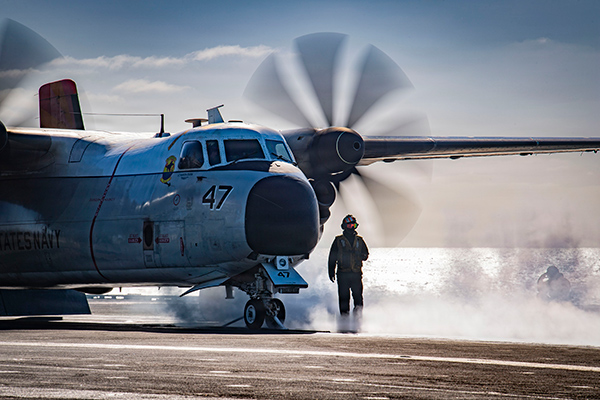
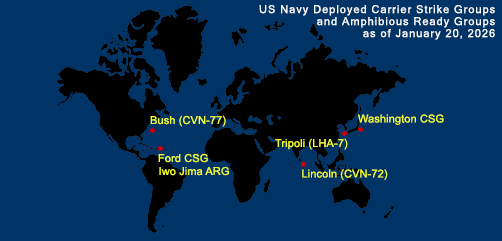
The overall repositioning has been described as matching or exceeding the 2025 buildup prior to strikes on Iran’s nuclear facilities. Multiple carrier strike groups are moving toward the region, alongside additional assets such as advanced fighter aircraft, tankers, transport aircraft, Patriot and THAAD systems, and rocket artillery. US destroyers and mine countermeasures ships are already operating near the Strait of Hormuz, positioning for possible escalation.
Tehran has responded with explicit warnings. IRGC Commander General Mohammad Pakpour said forces have their “finger on the trigger,” while senior officials have labeled US interests as targets. IRGC-linked media circulated a video highlighting facilities across multiple regional states within missile range. Foreign Minister Abbas Araghchi, in a Wall Street Journal op-ed, vowed “full-force retaliation,” promising a ferocious response and citing unused missile stockpiles from the 2025 war.
Washington has maintained a firm posture, emphasizing that all options remain on the table to address Iran’s actions and prevent further escalation. Tensions peaked on Thursday in Davos, where President Trump referenced the 2025 strikes on Iran’s nuclear sites and said the US would act again if needed. He also warned Iran against assassination attempts and threatened overwhelming consequences.
Escalation Pathways and What to Watch
If there is one mechanism most likely to harm Americans quickly without a formal declaration of war, it is attacks by Iran-aligned militias on US personnel and facilities in Iraq, Syria, and Gulf partner states. Kataib Hezbollah has explicitly threatened US bases if Washington strikes Iran. Long War Journal reports the group warned it would attack American bases in Iraq and the region using missiles and drones, delivering the message at a rally outside Iran’s embassy in Baghdad.
This creates a familiar escalation ladder: the US moves assets and issues threats to deter Iran or compel behavior; a proxy actor attacks (or attempts to attack) a US base; Washington retaliates to restore deterrence and protect forces; and Iran responds directly or via additional proxies, expanding the target set.
Even without a declared war, the Gulf can become uninsurable or disrupted if harassment or attacks on shipping rise. That tends to generate rapid economic and political pressure, increasing incentives for kinetic action framed as restoring freedom of navigation, especially given oil-market sensitivity to these tensions.
Beyond US–Iran dynamics, the regional architecture makes it likely that Israel and Gulf partners would be targeted in a retaliation scenario—directly or through proxies—raising risks for US citizens in those countries as well.
Observable indicators that the situation is shifting from “deterrence posture” to “pre-strike posture” would include further base posture changes (restricted movement, extended sheltering guidance, additional evacuations), expanded air-defense deployments, a surge in militia attack attempts in Iraq and Syria, and Iranian moves affecting aviation or maritime traffic—signals markets often interpret as pre-conflict messaging.
The Bottom Line:
The US military posture is now substantial and increasingly integrated with regional air and missile defense, functioning as more than a warning. At the same time, Tehran and Iran-aligned militias are explicitly framing US bases as legitimate targets if Washington strikes Iran. The result is a tightening tripwire environment: more assets, more alerts, more rhetoric, and more actors who can initiate violence on short notice.
For US citizens in the region, official security alerts should be treated as actionable: reduce exposure to military facilities, track mission messages closely, and assume disruptions to airspace, ports, and communications could occur quickly. |