Threat Journal Logo Banner - ALLOW  IMAGES
Jan 31, 2026
A weekly supplement to the AlertsUSA
National Threat and Incident Notification Service
for Mobile Devices
   
PODCAST - Listen to this issue. - ALLOW IMAGES
WEEKLY THREAT AND ALERT ROUNDUP
Published Each Saturday
 
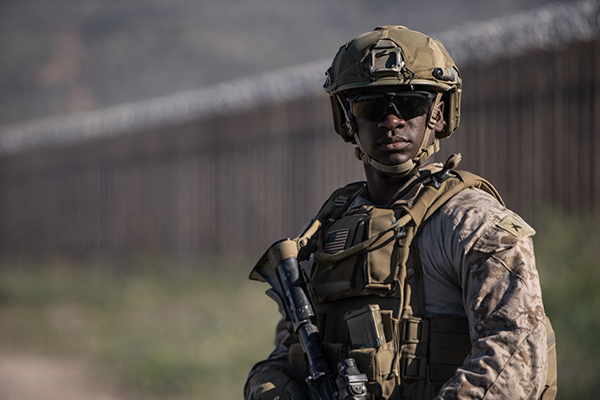
A U.S. Marine with 3rd Battalion, 4th Marines, assigned to Joint Task Force-Southern Border (JTF-SB), is photographed during a patrol along the southern border barrier in San Diego, Calif., Dec. 9, 2025.  - ALLOW IMAGES

DoD Warns of Direct Attacks on the U.S. Homeland
No Safe Distance Anymore

Jan 31, 2026
What You Need To Know

The 2026 National Defense Strategy, published late last week by the Department of Defense, delivers a stark message; the United States can no longer assume that major threats will remain overseas. Defending the homeland is now the U.S. military’s top priority, driven by an assessment that adversaries have both the intent and capability to strike U.S. territory directly.

The Homeland as the Battlefield

The strategy treats the homeland itself as a potential battlefield. This represents a shift from past assumptions that distance, geography, and forward deployments would keep conflict away from American cities and infrastructure. That assumption no longer holds.

The NDS document outlines a stark landscape of potential dangers—from border incursions and terrorism, to advanced cyber, criminal networks, and nuclear assaults. These threats do not operate in isolation. In many cases, they reinforce one another, creating complex risks that are harder to detect and deter.

Rather than focusing on a single enemy, the National Defense Strategy emphasizes resilience against a range of attack methods that could be used simultaneously, or sequentially, to overwhelm defenses and disrupt daily life.

Converging Threats

The NDS makes clear that Islamic terrorism remains a top threat to the U.S. homeland, despite efforts to degrade groups like al Qaeda and ISIS. The document notes that these organizations continue to evolve, retaining the intent and capabilities to launch attacks on the homeland. Safe havens in regions such as Africa could enable such strikes, prompting a call to Quote "hunt and neutralize Islamic terrorists who have the ability and intent to strike our Homeland." Unquote

This threat is compounded by the potential for lone actors or small cells to exploit domestic vulnerabilities.

Also at the forefront is narco-terrorism, where traffickers in the Western Hemisphere are now classified as foreign terrorist organizations. These groups exploit porous borders to facilitate illegal migration and the influx of deadly substances, resulting in widespread harm to American communities. This not only undermines public health but also poses a direct security risk by creating pathways for hostile actors to infiltrate U.S. territory.

Cyber, Drones, and Missile Dangers

One of the most serious warnings in the NDS involves cyber threats. Cyberattacks can target power grids, financial systems, transportation networks, undersea cables and other communications infrastructure, space assets, and water supplies. Unlike conventional attacks, they can be launched remotely and continuously, often without clear attribution, making them a preferred method for state actors seeking asymmetric gains.

A successful cyber operation could shut down essential services, damage the economy, and create widespread confusion without a single explosion. The new strategy treats cyber defense as a core element of homeland security, not as a secondary concern.

The NDS also highlights the growing risk posed by unmanned aerial systems. Small drones are inexpensive, widely available, and difficult to detect. They can be used for surveillance, sabotage, or direct attack against critical infrastructure and public spaces.

Because these systems can be launched from within the United States, they challenge traditional air defense models and blur the line between military defense and domestic security. Counter-drone capabilities are identified as an urgent requirement.

Despite the rise of unconventional threats, the strategy reaffirms that missile and nuclear dangers remain central to homeland defense. Advances in missile technology, including faster and more maneuverable systems, reduce warning times and significantly complicate interception.

The concern extends beyond full-scale nuclear war. Limited missile strikes, coercive threats, or miscalculations could still result in direct attacks on the U.S. homeland. For this reason, the NDS stresses maintaining a credible nuclear deterrent and improving missile defense systems capable of protecting the homeland from the likes of North Korea, whose arsenal is described as "increasingly capable of threatening the U.S. Homeland" through expansion and diversification.

Russia's vast, modernized nuclear capabilities add to this peril, raising the specter of escalation in multi-domain conflicts.

The Simultaneity Problem

The NDS also addresses the "simultaneity problem," where coordinated aggression from multiple adversaries—such as China, Russia, Iran, and the DPRK—could overwhelm U.S. defenses, potentially leading to a broader conflict that exposes the homeland.

Geography no longer provides the protection it once did. The new Strategy treats the Western Hemisphere itself as a contested space, where adversaries may seek access, influence, or positioning close to U.S. borders.

For security professionals, the NDS underscores the need for integrated defense across military, civilian, and private sectors.

For citizens, the message is sobering but clear: distance no longer guarantees safety. The threats facing the United States are real, adaptive, and increasingly close to home. Those concerned can contribute through community awareness and local preparedness, supporting policies that enhance border integrity, and staying informed on global risks and domestic tensions.


How Could AI Shape the Future of War? - ALLOW IMAGES
Commentary / Analysis / Research
Jan 31, 2026

How Could AI Shape the Future of War?

AI could affect four essential competitions in military affairs: quantity versus quality, hiding versus finding, centralized versus decentralized command and control, and cyber offense versus defense. To exploit AI's potential, the U.S. military might need to change important aspects of how it operates.

~ READ MORE HERE (RAND) ~

US Cyber Strategy Misunderstands China’s Threat

The adoption of an offense-first strategy is a dangerous miscalculation. It will not diminish Beijing’s campaigns, and it coincides with a significant deterioration of cyber defenses that have kept U.S. networks and Americans safe.

~ READ MORE HERE (CFR) ~

Europe's Fear: 'The Americanization of the World'

President Donald Trump's strategic decision to reorder our relationship with Europe may be startling Old World diplomats, but that is because they do not know their own history.

~ READ MORE HERE (Gatestone) ~


Book Ad: Al-Qaeda 2.0: The Upcoming Attack on the United States and Europe Unveiled

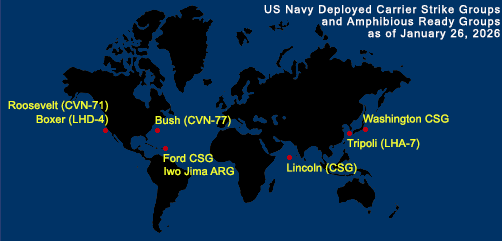
Fleet and Marine Tracker Map as of January 26, 2026.  - ALLOW IMAGES
U.S. Navy Fleet and Marine Tracker
As of January 26, 2026

These are the approximate positions of the U.S. Navy’s deployed carrier strike groups and amphibious ready groups based on U.S. Navy briefings, public data provided by the U.S. Naval Institute, and open source reporting. Map does not reflect this week's deployments.


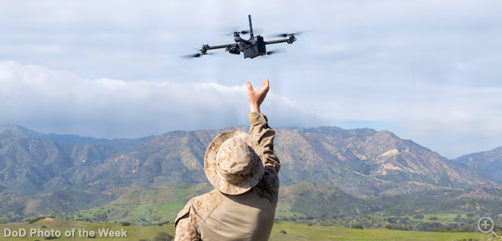
Marine Corps Sgt. Jason Hamm, a small unmanned aircraft systems operator assigned to the 1st Marine Division Schools, prepares to catch a first-person view drone after a live-fire exercise as part of the small attack drone operator's course at Marine Corps Base Camp Pendleton, Calif., Jan. 23, 2026.  Image: DoW - ALLOW IMAGES.
World News Roundup
Jan 31, 2026

PUBLIC HEALTH

CDC surpasses 1 million voluntary participants in biosurveillance program

AMERICAS

Lawyers accuse Mexico of breaking law in sending cartel members to US
UN criticizes Haiti for lack of progress on a political transition
Trump says he’s reopening Venezuelan airspace and Americans may visit
POTUS addresses threats to the United States by the government of Cuba
DHS purchases $70M 418,000-square-foot AZ warehouse
Tech boss issues warning over ‘unimaginable’ power of AI
Rubio says Maduro abduction ‘strategic’ necessity, downplays future attacks
Panama court quashes CK Hutchison port contracts, clouding sales plan
Mexico struggles to contain escalating violence in Sinaloa
Small plane crash in rural area of Colombia kills 15 including congressman
US, Mexico agree to begin talks on USMCA reforms, timing unclear
Costa Rica’s leading presidential candidates embrace hardline security

EUROPE

Germany to harden critical infrastructure as Russia fears spike
UK police to use AI facial recognition tech linked to the war in Gaza
Belarusian balloons full of cigarettes pose NATO’s latest security threat
‘Keep on dreaming’: could Europe really defend itself without the US?
NATO fighter wing conducts front-line air patrols with drone defenses
Undersea cable sabotage leads Finns to create a maritime monitoring center
NATO without America: Europe ‘thinks the unthinkable’
Zelenskyy: US security agreement for Ukraine is '100% ready' to be signed
Poland built the E.U.’s biggest army, but the threat has changed
EU designates Iran’s revolutionary guard as terrorist organisation
Icebreakers are only made by either US allies or adversaries
How Baltic Edge becomes a strategic imperative for NATO and the EU

MIDDLE EAST / AFRICA

Tehran to convert metro stations, parking lots into 'war shelters'
Syria, Kurds reach integration deal after weeks of clashes
Heavy gunfire erupts near Niger capital's airport
EU lists Iran’s paramilitary revolutionary guard as terrorist organization
Trump ramps up pressure on Iran with carrier and threats
Iran seeks to avert US military action with talks in Ankara
What to know about Gaza’s Rafah crossing, which could open within days
Israel launches ‘large-scale operation’ to locate last hostage in Gaza
Planes hit by gunfire and blasts heard at airport in Niger capital reports
Mali imposes fuel rationing as al-Qaida-linked attacks cut off supplies
IDF says Hezbollah commander killed in Lebanon strike

ASIA / OCEANIA

US unveils national defence strategy to counter China in Indo-Pacific
ASEAN does not recognize Myanmar’s elections at regional meeting
A US warship makes a landmark visit to a Cambodian naval base
Human networks anchor maritime security in the Indo-Pacific
Japan and PI sign new defence pact to facilitate flow of military supplies
How Japan and the Philippines are hedging against China together
China’s top general under investigation amid a military corruption crackdown
The Indo-Pacific’s defining dilemma for democracies
Philippines, AUS, Japan, and US concerned over China’s destabilizing acts
China rejects Japan’s bid for a UN Security Council seat
Congress calls for expanded multilateral defence ties across Indo-Pacific


Alert! Symbol - ALLOW IMAGES

Travel Security Resources


We want your feedback! Let us know your thoughts on today's issue.
Write us at service [at] alertsusa.com

Copyright © 2011-2026 AlertsUSA Inc.
NOTE: If URLs do not appear as live links in your e-mail program, please cut and paste the full URL into the location or address field of your browser. Disclaimer: Threat Journal and AlertsUSA, Inc., may from time to time recommend products that we've either personally checked out ourselves, or that come from people we know and trust. For doing so, we receive a commission. We will never recommend any product that does not have a 100% money-back satisfaction guarantee. Nothing in this e-mail should be considered personalized Financial Advice. No communication by our employees to you should be deemed as personalized Financial Advice. Any investments recommended in this letter should be made only after consulting with your investment advisor and only after reviewing the prospectus or financial statements of the company. Nothing in this e-mail should be considered personalized Health Care Advice. Although our employees may answer your general customer service questions, they are not licensed health care professionals. No communication by our employees to you should be deemed as personalized Health Care Advice. Any Health Care recommended in this letter should be made only after consulting with your Doctor and licensed Health Care Advisor.

Ezekiel 33:3 - "Then if anyone hears the trumpet but does not heed the warning and the sword comes and takes their life, their blood will be on their own head."


AlertsUSA on Spotify AlertsUSA on Apple Podcasts AlertsUSA Threat Journal Homeland Security Weekly Update podcast feed. AlertsUSA on SoundCloud