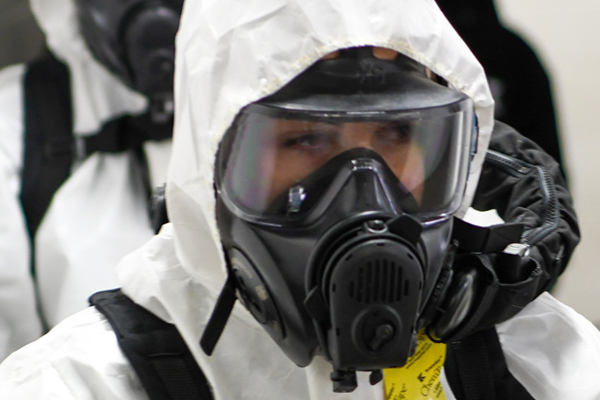
Early this week, authorities executed a search warrant on a residence in northeast Las Vegas after receiving a tip about potential biohazardous materials and lab equipment stored on the property. Deploying SWAT teams, robots, and hazmat units, investigators seized refrigerators and freezers from a locked garage containing Mandarin-labeled vials, unknown liquids, and more than 1000 samples of unknown biological materials, along with lab equipment such as a biosafety hood and centrifuge. All items were transported for forensic testing.
What propelled this case beyond routine enforcement were credible reports of severe health impacts on individuals exposed to the site. Court filings and police accounts detail that a former housecleaner and a handyman fell "deathly ill" days after entering the garage, suffering breathing difficulties, extreme fatigue, muscle aches, and bedridden weakness. Additional reports indicate that guests at the property—which operated partly as an Airbnb—experienced similar symptoms, including at least one woman hospitalized for acute respiratory issues. Authorities stress that the incident remains isolated, with no broader public threat identified to date.
The home's owner, Jia Bei Zhu, a Chinese national currently in federal custody, faces trial in April on charges stemming from an illegal biolab discovered in Reedley, California, in 2023. In that case, investigators found thousands of vials—some labeled with pathogens like HIV, tuberculosis, and a lethal malaria strain—along with hundreds of laboratory animals. Property records link Zhu to the Las Vegas residence through an LLC, and phone records show he contacted the property manager, Ori Solomon, 467 times from jail over the past year—suggesting continued coordination.
Solomon, a 55-year-old Israeli citizen on a non-immigrant visa expiring this year, was arrested during the raid and faces charges including felony disposal of hazardous waste and possession of a firearm incompatible with his visa status. He has since been released pending further proceedings.
The Las Vegas raid—coming just days ago and directly tied to an individual already in custody for a prior biolab—underscores that these threats are not historical anomalies but an active, evolving danger.
Smuggling and Academic Exploitation
This incident fits into an alarming uptick in cases involving the smuggling of biological materials from China into the U.S., often masked as legitimate academic research. Federal authorities have flagged these as threats to national and agricultural security.
Recent examples include:
- In November 2025, three Chinese researchers were charged by the DOJ with conspiracy to smuggle biological materials. They allegedly received multiple concealed shipments of genetically modified roundworms and plasmids from a contact in Wuhan, China. To get them into the US, the shipments were intentionally mislabeled as "glass sheets" or "plastic plates" to bypass customs.
- In June 2025, two Chinese nationals were charged with smuggling a dangerous fungus, Fusarium graminearum into the US, which can devastate staple crops, cause billions in agricultural losses, and is considered a potential agroterrorism weapon.
What elevates these incidents from regulatory breaches to national security concerns is their repetition, coordination, and methods. These were not accidental failures to check a box. The materials were deliberately concealed, shipments were misdeclared, and academic cover was used to bypass oversight mechanisms designed to protect public health and agriculture.
When viewed alongside other recent cases, including the illicit labs discovered in California and Nevada, the smuggling incidents appear to be part of a larger, unresolved pattern of dangerous biological R&D activity taking place at the edges of U.S. regulatory visibility. The common threads include Chinese nationals, opaque research purposes, unauthorized materials, and exploitation of trusted institutions.
The risks are immediate and multifaceted: accidental release in populated areas, unintended health impacts, diversion for malign purposes, or escalation into deliberate threats.
For U.S. law enforcement and intelligence communities, the takeaway is urgent: Existing screening, academic oversight, and import enforcement mechanisms are being tested and bypassed, revealing profound vulnerabilities in U.S. biosecurity, public health, and national security. Agencies and policymakers must act swiftly to strengthen intelligence sharing, close exploitable loopholes in customs and academic protocols, enhance monitoring of foreign researchers, and prioritize rapid response to tips involving biological materials.
|